What insurance verification actually involves
Moving beyond a simple active coverage check requires capturing detailed plan limitations, waiting periods, and benefit frequencies. A structured approach ensures your team has the right information before the patient arrives, reducing morning rush confusion and unexpected billing surprises.
 Rachel HuCo-founder, Byteblock.ai
UC Berkeley; Forbes 30 Under 30
Rachel HuCo-founder, Byteblock.ai
UC Berkeley; Forbes 30 Under 30
Discover the true scope of dental insurance checks. Learn how gathering comprehensive benefit details prepares your front desk for accurate patient conversations and smoother daily operations.
Quick orientation
Executive Summary
Effective dental administration requires a comprehensive approach to gathering patient coverage details prior to appointments. When practices understand the full scope of eligibility checks, they can better prepare for financial conversations and treatment planning. Byteblock supports this process by gathering administrative data across different payer systems, presenting it in a consistent format, and routing exceptions to your staff. This collaborative workflow reduces front-desk friction while ensuring that all consequential financial and clinical decisions remain firmly in the hands of your trained practice personnel.
- Comprehensive verification captures deductibles, maximums, and specific plan limitations.
- Consistent data presentation helps staff manage the morning front-desk rush.
- Byteblock gathers administrative benefits data while routing exceptions for human review.
The true scope of coverage checks
Many dental practices quickly realize that confirming a patient has an active policy is only the first step. To truly understand what insurance verification actually involves, operators must look at the granular details that dictate coverage. This includes capturing deductibles, annual maximums, benefit frequencies, specific procedure limitations, waiting periods, and any used maximum information available. Gathering this comprehensive data requires navigating various payer portals and phone systems, which often competes with the morning front-desk rush. Without these specifics, treatment coordinators cannot provide accurate out-of-pocket estimates, leading to difficult conversations when unexpected balances arise after the appointment.
The American Dental Association has identified eligibility and benefits verification as a significant pain point for providers, citing challenges such as inconsistent response data, payer portal variability, and the need for staff to leave their primary workflow to find information. To address these administrative burdens across the healthcare spectrum, the Centers for Medicare & Medicaid Services and the Department of Health and Human Services mandate the use of the ASC X12N 270/271 standard for electronic eligibility and benefit verification. Byteblock operates alongside your existing software to help navigate these varied payer systems and gather this essential administrative data.[1][2]
Structuring the verification workflow
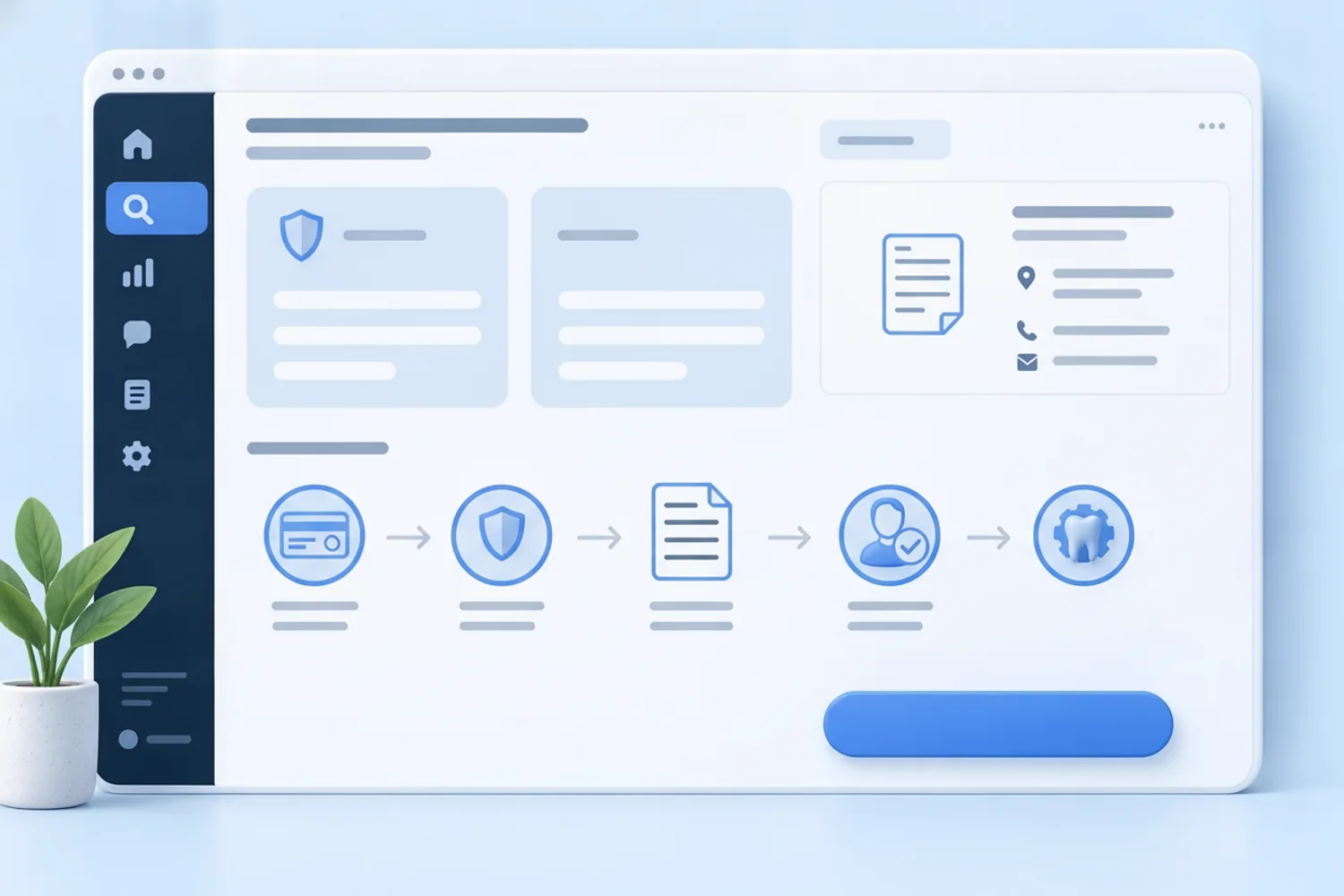
A reliable workflow checks each scheduled patient consistently, including returning patients when appropriate, to catch unexpected policy changes. Presenting these results in a consistent format with the source and status clearly visible helps front-desk teams process information quickly. Furthermore, the CAQH CORE Operating Rules for Eligibility & Benefits, adopted by HHS, aim to support complex benefit designs and ensure a more uniform implementation of these transactions between health plans and providers. When data is organized uniformly, staff can easily spot missing details and prepare for financial discussions before the patient even walks through the practice doors.
Even with standardized rules, missing or uncertain details frequently occur, requiring a system that routes these exceptions to a person rather than silently guessing. Byteblock supports this by handling the initial administrative eligibility and benefits gathering, then providing a human review checkpoint for any discrepancies. As highlighted by CMS, providing clear estimates of allowed amounts, coinsurance, and patient balances helps protect consumers from unexpected bills and aligns with broader healthcare transparency goals. By combining Byteblock with human oversight, practices maintain control over all consequential financial decisions while streamlining their daily administrative intake and scheduling coordination.[3][4]
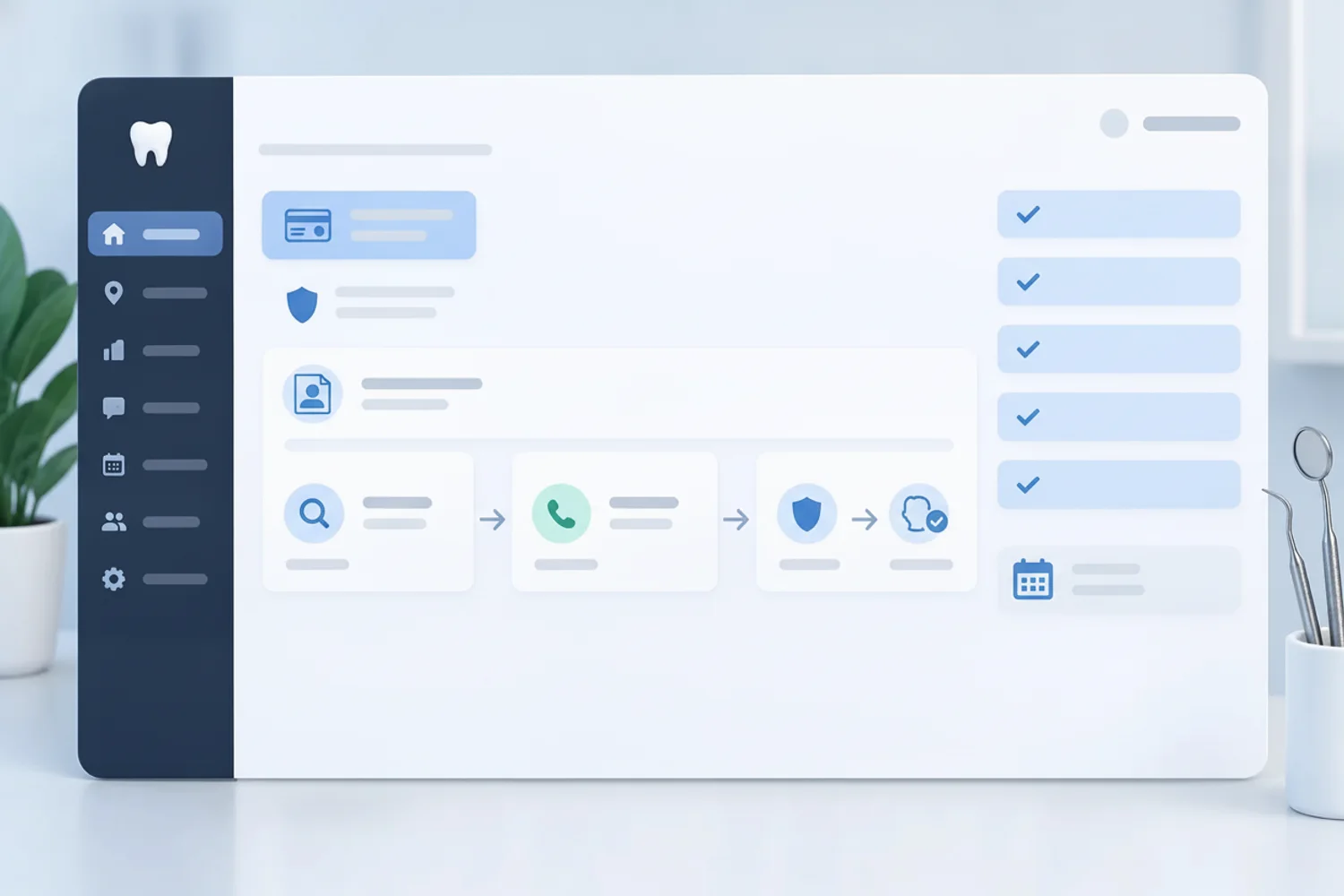
Illustrative workflows
Three ways to structure the work
New patient intake and eligibility
- Operational problem
- Dental practices often struggle to gather complete insurance breakdowns for new patients before their first appointment, leading to rushed morning verifications and incomplete data regarding waiting periods or specific procedure limitations.
- Byteblock role
- Byteblock assists by gathering administrative eligibility and benefits data from payer portals, compiling deductibles, annual maximums, and benefit frequencies into a consistent format alongside the practice's existing software.
- Human checkpoint
- The front desk staff reviews the compiled benefit breakdown, verifying any flagged missing information and making all final determinations regarding how the coverage applies to the proposed treatment plan.
What it shows: This illustrates how delegating the initial data gathering to Byteblock allows practice personnel to focus on reviewing the information and preparing for accurate financial conversations with the new patient.
Returning patient coverage updates
- Operational problem
- Returning patients frequently change employers or insurance plans without notifying the office, causing unexpected claim denials when the practice assumes the previous policy is still active and bills the old payer.
- Byteblock role
- Byteblock supports the scheduling coordination process by checking the eligibility status of scheduled returning patients, gathering updated administrative details like used maximums and remaining benefits from the connected payer systems.
- Human checkpoint
- A designated team member evaluates any alerts indicating a lapsed policy or changed payer, contacting the patient directly to request updated insurance information before the scheduled appointment takes place.
What it shows: This demonstrates how routine administrative checks by Byteblock help identify hidden coverage changes early, ensuring that human staff can intervene and resolve discrepancies before clinical services are rendered.
Handling complex plan limitations
- Operational problem
- Certain dental policies feature complex clauses, such as missing tooth clauses or specific frequency limitations on imaging, which are often buried in payer portals and easily missed during manual checks.
- Byteblock role
- Byteblock navigates these payer systems to extract detailed administrative benefit information, organizing the data so that specific limitations, waiting periods, and source statuses are clearly visible to the dental team.
- Human checkpoint
- Treatment coordinators review these specific limitations, using their professional judgment to calculate out-of-pocket estimates and deciding how to present the financial realities to the patient during the consultation.
What it shows: This highlights that while Byteblock handles the tedious gathering of complex administrative details, all consequential financial decisions and patient communications remain strictly under the control of the practice's trained staff.
Reusable blueprint
Three-workflow blueprint
| Workflow | Byteblock role | Human checkpoint |
|---|---|---|
| New patient intake and eligibility | Byteblock assists by gathering administrative eligibility and benefits data from payer portals, compiling deductibles, annual maximums, and benefit frequencies into a consistent format alongside the practice's existing software. | The front desk staff reviews the compiled benefit breakdown, verifying any flagged missing information and making all final determinations regarding how the coverage applies to the proposed treatment plan. |
| Returning patient coverage updates | Byteblock supports the scheduling coordination process by checking the eligibility status of scheduled returning patients, gathering updated administrative details like used maximums and remaining benefits from the connected payer systems. | A designated team member evaluates any alerts indicating a lapsed policy or changed payer, contacting the patient directly to request updated insurance information before the scheduled appointment takes place. |
| Handling complex plan limitations | Byteblock navigates these payer systems to extract detailed administrative benefit information, organizing the data so that specific limitations, waiting periods, and source statuses are clearly visible to the dental team. | Treatment coordinators review these specific limitations, using their professional judgment to calculate out-of-pocket estimates and deciding how to present the financial realities to the patient during the consultation. |
Implementation checklist
How to put the workflow into practice
Check scheduled patients consistently
Implement a daily routine to verify coverage for every scheduled appointment, including returning patients. Consistent checks help catch unexpected policy changes early, preventing claim denials and ensuring your team is fully prepared for the morning front-desk rush.
Capture comprehensive plan details
Go beyond simple active status checks by gathering deductibles, annual maximums, benefit frequencies, limitations, and waiting periods. Having this complete picture allows your treatment coordinators to provide accurate estimates and avoid unexpected billing surprises for your patients.
Standardize your data presentation
Ensure that all gathered insurance information is presented in a consistent format with the source and status clearly visible. Uniform data organization helps staff quickly digest complex benefit designs and spot missing details before the patient arrives.
Route exceptions to human staff
Establish a clear protocol for handling missing or uncertain insurance details. Instead of silently guessing, route these exceptions to a trained team member who can investigate further, ensuring that all consequential financial decisions remain with the practice.
Sources
- ada.org — American Dental Association
- cms.gov — Centers for Medicare & Medicaid Services
- healthit.gov — isp.healthit.gov
- cms.gov — Centers for Medicare & Medicaid Services
- cms.gov — Centers for Medicare & Medicaid Services
Common questions
Frequently asked questions
Byteblock supports your practice by handling the administrative eligibility and benefits gathering across various payer portals and phone systems. It compiles deductibles, maximums, and limitations into a consistent format alongside your existing software. This reduces the manual burden on your front desk, allowing them to focus on patient communication and treatment coordination during busy mornings.
No, Byteblock never makes any consequential, uncertain, clinical, coding, or financial decisions for your office. Its approved role is strictly limited to administrative data gathering. Once the insurance details are compiled, a mandatory human review checkpoint is utilized. Your trained practice personnel retain full control over calculating patient estimates, determining treatment plans, and making all final financial decisions.
When missing or uncertain details arise during the verification process, Byteblock is designed to route these exceptions directly to a person rather than silently guessing. This ensures a critical human review checkpoint where your staff can manually investigate the discrepancy, contact the payer if necessary, and accurately finalize the patient's benefit breakdown before their appointment.
Gathering comprehensive data, such as waiting periods and specific limitations, is crucial for accurate treatment planning. As highlighted by CMS, providing clear estimates of allowed amounts, coinsurance, and patient balances helps protect consumers from unexpected bills and aligns with broader healthcare transparency goals. This thorough approach prevents difficult financial conversations after the clinical services are completed.[5]
See how Byteblock fits your dental practice
Request a practice assessment
Book a demo